Busha Business and Tether Join Forces to Scale Stablecoin Payments Across Africa
Busha Business, the B2B infrastructure arm of Nigerian exchange Busha, has entered a strategic collaboration with Tether to expand regulated stablecoin access for businesses across Africa, as reported by Disrupt Africa.
Zoe Waverly·updated July 24, 2026
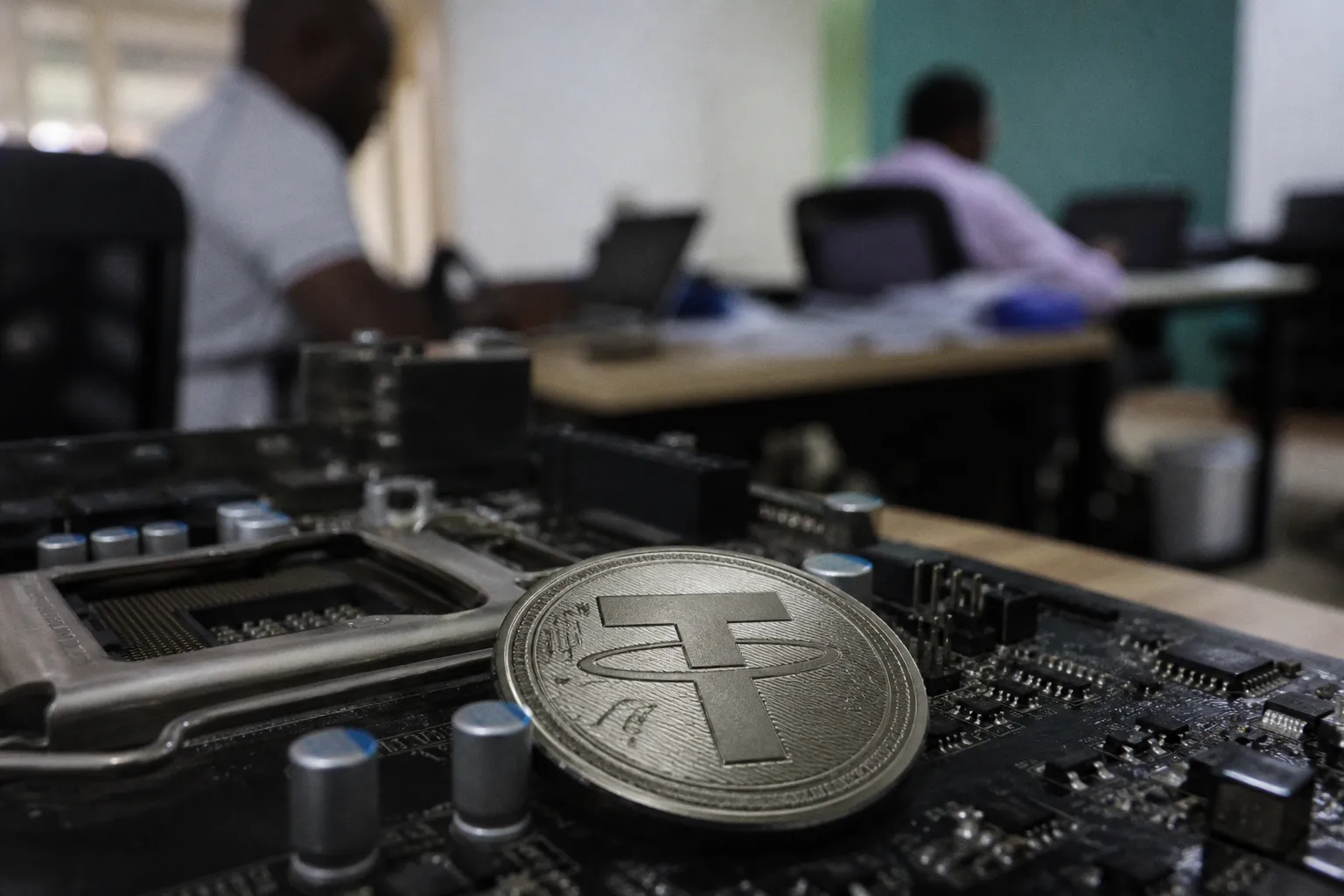
The partnership routes USDT into commercial settlement and treasury channels in Nigeria and Kenya — markets where cross-border payment friction and naira/kshilling volatility create structural demand for dollar-denominated liquidity. The move coincides with a sustained contraction in USDT's circulating supply, making new distribution corridors a relevant variable in the token's liquidity architecture.
Routing USDT Into Commercial Rails
The mechanism operates through Busha's SEC-licensed digital asset foundation. Via Busha Pay, businesses accept international payments with settlement in USD; treasury products enable companies to earn daily yields on idle USD and Naira balances through licensed third-party asset managers. The platform currently serves more than 1,500 businesses across Nigeria and Kenya — in Kenya alone, more than 250 businesses process millions of Kenyan shillings in daily transactions for international supplier payments, treasury operations, and cross-border settlement. Tether CEO Paolo Ardoino described the collaboration as enabling "faster, more reliable money movement across Africa," framing it within the company's broader commitment to regulated financial infrastructure in emerging markets. The client base spans large corporates, importers, exporters, e-commerce merchants, SMEs, and fintech developers — a cross-section that distributes USDT demand across use cases rather than concentrating it on exchange-based speculation.
The Supply Backdrop
The partnership's timing carries structural weight. USDT's market capitalization has declined by approximately $5.4 billion over the past 60 days, falling from a peak near $190 billion in May 2026 to roughly $184.14 billion as of late July, according to Crypto Briefing. The broader stablecoin market has contracted by approximately $10 billion since its May peak, with $7.7 billion logged in June alone. Tether maintains a reserve buffer of $8.23 billion above token obligations and posted Q1 2026 profit of $1.04 billion — financial headroom that is structurally sound — but the sustained multi-month drawdown represents one of the most significant pullbacks since the 2022-2023 contraction period. Separately, Whale Alert flagged a 500 million USDT transfer from the Tether Treasury to Binance, underscoring active liquidity redistribution across major venues.
What the Plumbing Signals
The Busha arrangement is a distribution-channel play: moving USDT into commercial utility corridors where settlement demand is driven by trade flows rather than trading volume. For the stablecoin's mint/burn mechanics, the critical question is whether African business adoption generates sufficient transactional throughput to absorb tokens that might otherwise exit through the broader supply contraction. If cross-border settlement volume through Busha Business scales meaningfully, it creates a demand sink that operates independent of speculative cycles — a fundamentally different liquidity profile than exchange-based inflows. USDT still commands roughly 58% of the total stablecoin market, which stood at approximately $321 billion as of April 2026 data. In a market of that scale, the expansion of regulated commercial corridors is a variable worth tracking alongside treasury flows and reserve composition.