TRON: Eco Integration Expands Stablecoin Network
A TRON-focused item from blockchain.news says an “Eco Integration” is expanding the network’s stablecoin footprint, but the available snippet does not identify the asset, issuer, bridge path, or mint/burn design.
Zoe Waverly·updated July 14, 2026
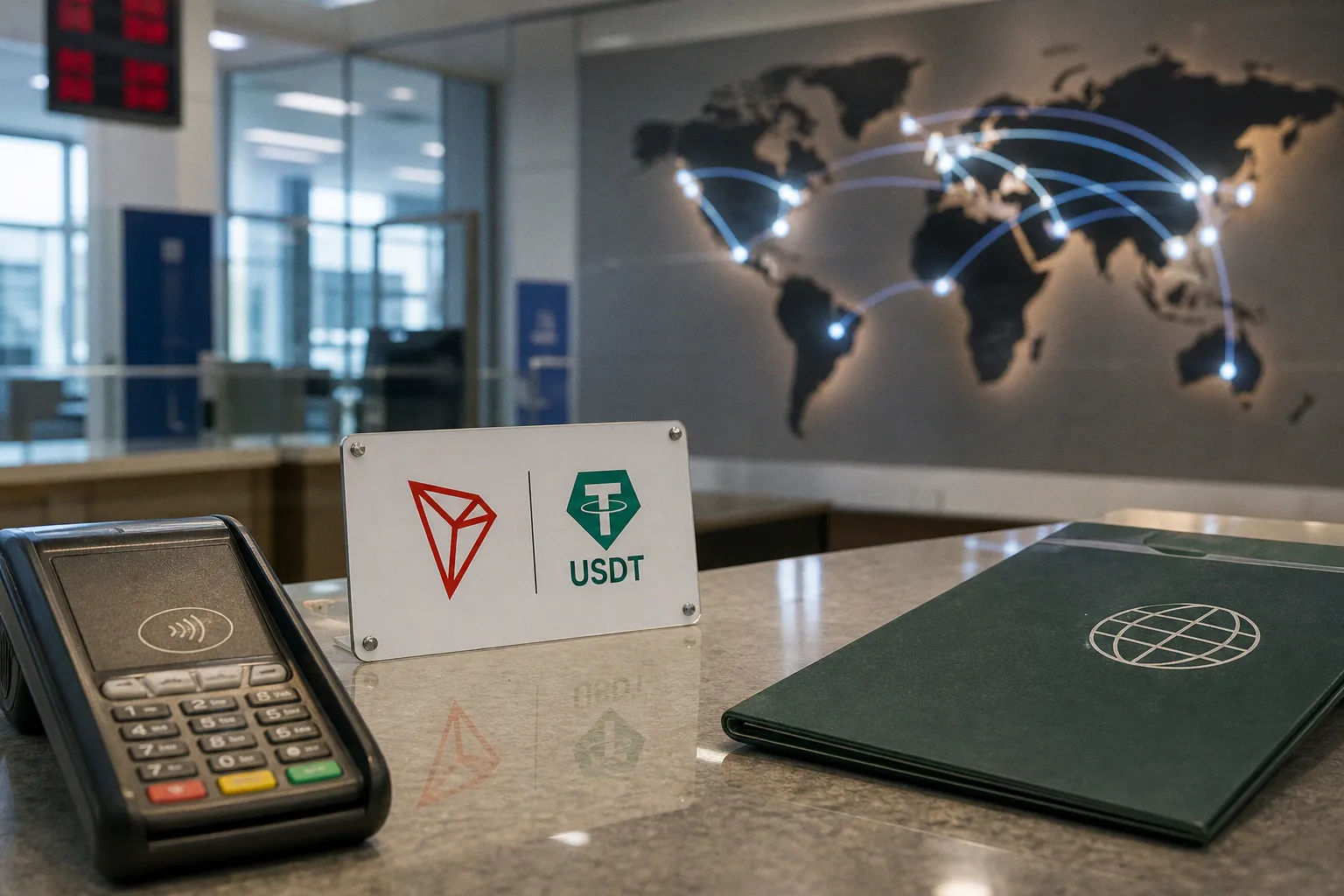
The integration signal is about settlement rails, not branding
The confirmed item is narrow: blockchain.news reported “TRON: Eco Integration Expands Stablecoin Network.” On its face, that indicates another connection point for stablecoin circulation on TRON, a chain already watched closely by dollar-token users because stablecoin transfers depend on low-friction settlement and predictable redemption routes.
The mechanical question is simple. If the integration creates a new route for stablecoin deposits, withdrawals, or application-level settlement, then it can widen the arbitrage loop between exchanges, wallets, and on-chain venues. If it is only a listing-style or interface-level integration, the impact is weaker: balances may move through a new front end, but the underlying liquidity pool and redemption path may remain unchanged.
The available evidence does not confirm which of those models applies. It also does not confirm whether USDT is directly involved, whether a new stablecoin is being supported, or whether the integration changes custody, bridge, or issuer-side controls. Readers should therefore treat the headline as a network-expansion signal, not as proof of deeper dollar liquidity until the route and asset contracts are visible.
Stablecoin liquidity is becoming multi-rail
The TRON item lands alongside broader signals that stablecoin liquidity is spreading across chains and asset types. Pluang reported that Solana’s non-USDC/USDT stablecoin supply has risen 15x since January 2025, describing the move as supportive of network liquidity and adoption. KuCoin framed stablecoins as part of the liquidity engine beneath bitcoin.
Those two points matter for TRON because stablecoin networks do not compete only on nominal supply. They compete on transfer finality, exchange support, fee predictability, and the ability of market makers to close the loop when a token trades away from its target value. In a fiat-backed stablecoin system, the stabilizing path is not abstract: buy below par, redeem or sell where the token clears closer to par, then repeat until the spread compresses. That loop works only if rails remain open and balances can be moved without hitting operational bottlenecks.
CryptoRank also reported that Hong Kong is building a gold and yuan network that sidesteps dollar stablecoins. That is not a direct TRON datapoint, but it reinforces the same market structure issue: dollar tokens are no longer the only settlement design being tested. For USDT watchers, the relevant comparison is not ideology. It is whether alternative rails can attract enough usable liquidity to matter during stress.
What to verify before treating this as new liquidity
The first check is the contract layer. If the integration supports a specific stablecoin, users need to verify the token contract, issuer disclosures, and whether mint/burn mechanics are native, bridged, or custodial. A bridged representation changes the risk model: the peg can depend not only on issuer reserves but also on bridge custody and withdrawal limits.
The second check is venue depth. A new route has practical value only if exchanges, market makers, and wallets support both sides of the transfer. Otherwise, liquidity can appear in dashboards while remaining difficult to arbitrage when spreads open.
The third check is stress behavior. Pluang’s separate report noted more than $315 million in leveraged long liquidations within 24 hours as bitcoin fell below $60,000, with bitcoin accounting for $152 million. In that environment, stablecoin rails are tested less by announcements than by forced flows: collateral moves, withdrawals queue, and traders seek the fastest dollar substitute.
For TRON, the theoretical limit is clear. An ecosystem integration can expand reach, but it does not automatically deepen redeemable liquidity or improve peg resilience. Until the asset path, counterparties, and exit mechanics are confirmed, the safer interpretation is incremental network connectivity rather than a verified change in the stablecoin balance sheet.