FDIC Proposes New Weekly and Quarterly Reporting Requirements for Stablecoin Issuers
According to the FDIC, its GENIUS Act proposal would require supervised permitted payment stablecoin issuers to submit weekly and quarterly reporting forms.
Clarence Bingham·updated July 18, 2026
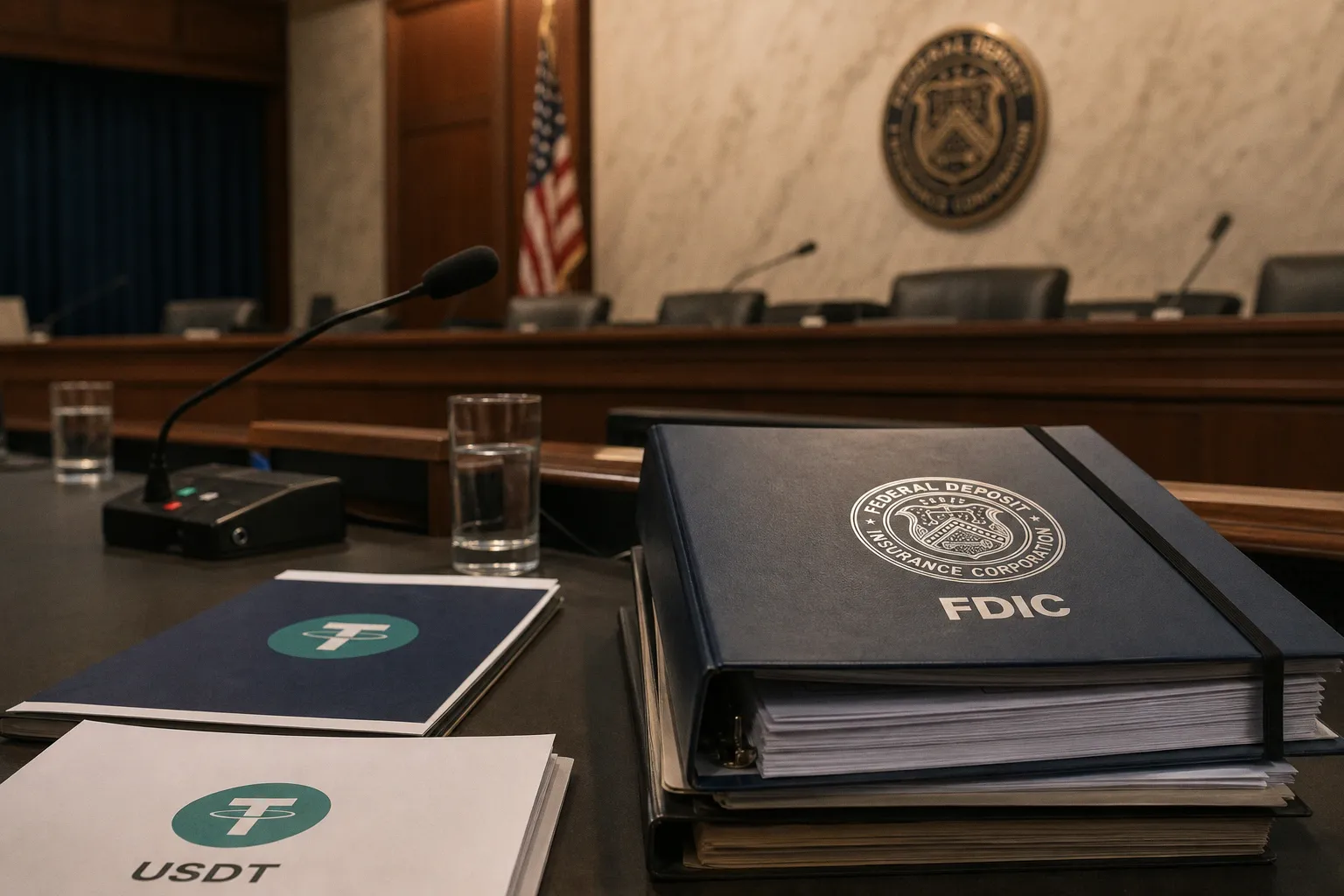
The collection is intended to monitor capital, reserves and licensing compliance. The relevant perimeter is narrower than the stablecoin market as a whole: it applies to FDIC-supervised issuers that are subsidiaries of FDIC-supervised financial institutions and have FDIC approval to issue payment stablecoins.
The reporting perimeter
The FDIC notice states that the proposal was made on April 10, 2026, as part of a rulemaking to implement requirements under the Guiding and Establishing National Innovation for U.S. Stablecoins Act.
The specified entities are permitted payment stablecoin issuers under FDIC supervision. The notice also says they must be subsidiaries of FDIC-supervised financial institutions and approved by the agency to issue payment stablecoins under the GENIUS Act.
This distinction matters. The proposal describes a supervisory reporting framework for an identified institutional issuer class. It does not, in the provided notice, establish a reporting requirement for every dollar-linked token or every issuer serving U.S. users.
Weekly data, quarterly review
The proposed collection has two frequencies:
- Weekly forms.
- Quarterly forms.
The FDIC identifies three reporting targets: capital, reserves and licensing compliance. These are separate balance-sheet and authorization variables.
For reserve analysis, the material point is not an attestation label. It is the move toward recurring supervisory data collection. A weekly reporting cadence would place reserve information within an ongoing prudential process for covered issuers, while quarterly forms provide a second reporting layer under the same proposal.
The notice does not provide the content of individual fields in the evidence available here. It therefore does not establish which assets, maturities, custodians, liabilities or redemption flows would be reported in each form.
What to monitor
The immediate variable is implementation, not token supply. The FDIC proposal remains a proposal in the notice.
Market participants assessing issuer collateralization should separate three questions:
- Whether an issuer falls within the FDIC-defined permitted payment stablecoin issuer perimeter.
- Whether the issuer is a subsidiary of an FDIC-supervised institution.
- Whether it has received the FDIC approval referenced in the notice.
For covered entities, the proposed framework would connect reserve and capital reporting to licensing compliance. For non-covered structures, the notice alone does not support an inference of equivalent FDIC reporting.
The systemic change under consideration is administrative but material: reserve disclosure would move from issuer-facing communications toward scheduled supervisory collection for a defined U.S. issuer category.